
Neutral GuessWish educational material for adults about privacy, without a promise of guaranteed anonymity.
Map personal information and inspect privacy claims in concrete terms.
This adult guide treats privacy as a practice of deciding what to disclose. It contains no dating directory, registration bypass or promise of guaranteed anonymity. It does not assert that any particular service collects specified data. Check that service’s current documents, settings and understandable feature descriptions to establish what is actually stated about its handling of information.
- Separate public information, private messages and platform processing.
- Inspect photos and combinations of recognisable details.
- Set disclosure limits and clarify available data controls.
Separate three questions about visibility
The first question is what profile visitors can see. The second is what reaches a person when you send a message or photograph. The third is what the platform itself processes under its stated rules. A pseudonym may alter your public presentation without answering the other two questions. Write them separately so that the advertising word “anonymous” does not replace a specific check. If a service’s explanation is unclear, treat the missing answer as unknown rather than as evidence of complete protection.
Examine small details in combination
A name, profession, unusual interest and photograph from a regular location may each seem harmless. Together, they can sometimes reveal more than you intended to share. Review the whole profile for work documents, badges, house numbers or a recognisable daily route. Remove unnecessary details before publication. Do not adopt someone else’s identity to hide your own. You can discuss a preference for privacy honestly without presenting another person’s face, history or achievements as yours.
Treat each disclosure as its own decision
Information sent to one person can move beyond your control. Before sending a telephone number, personal image or detailed schedule, ask whether it is necessary for the current conversation. You can suggest continuing in the channel already available. Someone else’s urgency or offence is not a sufficient reason to reveal more. You may limit information after several enjoyable conversations too, and you do not owe documents as proof of trust. A comfortable pace of disclosure can remain part of your boundaries.
Read “no registration” literally
The absence of a familiar account creation form does not establish that no technical information or submitted content exists. Read the description of the particular page and its available privacy documents. Do not enter payment details for a supposedly anonymous identity check without understanding the recipient and purpose. If you cannot tell how to remove submitted material or ask a question, that is a separate reason to postpone use. Easy access does not replace clarity about what happens to information afterwards.
Prepare your own information routine
Choose details you will not publish and situations that would make you stop a conversation. Review available visibility and notification controls, then inspect your profile as an ordinary reader would. If you have already shared more than intended, do not reveal even more while trying to explain. Use available removal or support options while recognising that they do not promise to erase copies held by others. Return to your information map and adjust the habits that led to the uncomfortable disclosure.
- Personal contacts are shared deliberately.
- Photos contain no unnecessary identifying details.
- Documents and settings have been reviewed; unknowns remain labelled.
A place to start
Choose a relevant example and adapt it to your situation. Do not assume someone has interests they have not mentioned.
A response about contact details: “For now I am comfortable talking here. I am not sharing my number or workplace at this stage; I can reconsider if our conversation develops.”
A photo check: “I like the light in this picture, but my work badge is visible. I will choose another image without information I did not intend to publish.”
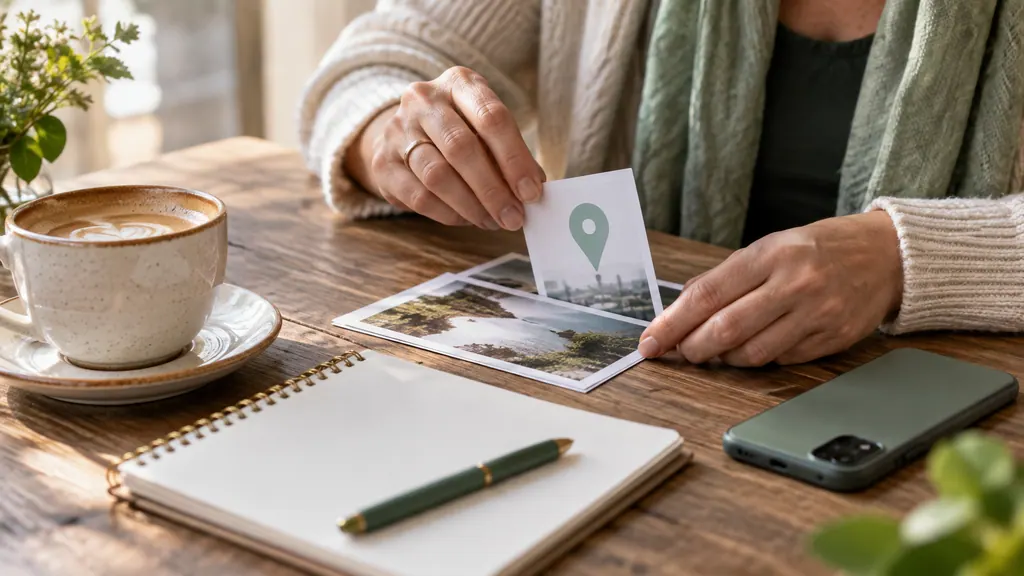
Prepare your own version
Map personal information and inspect privacy claims in concrete terms.: Choose one step and write down how you would like to suggest it.
Your text stays in this tab and is not sent to the server. It disappears when you close the page; save a file if you want to keep it.
What else is useful to know
Does a pseudonym guarantee anonymity?
There is no basis for treating it as a guarantee. It changes one element of a public profile; images, contact details, messages and platform rules need separate attention.
Can I rely on the phrase “no registration”?
Understand it only within the described access method. It does not replace information about data storage, processing and removal. Check the conditions of the particular service.
Must I send a document to prove sincerity?
You do not owe personal documents to an unfamiliar conversation partner. Discuss a comfortable degree of openness or end the exchange if your boundaries are not accepted.